



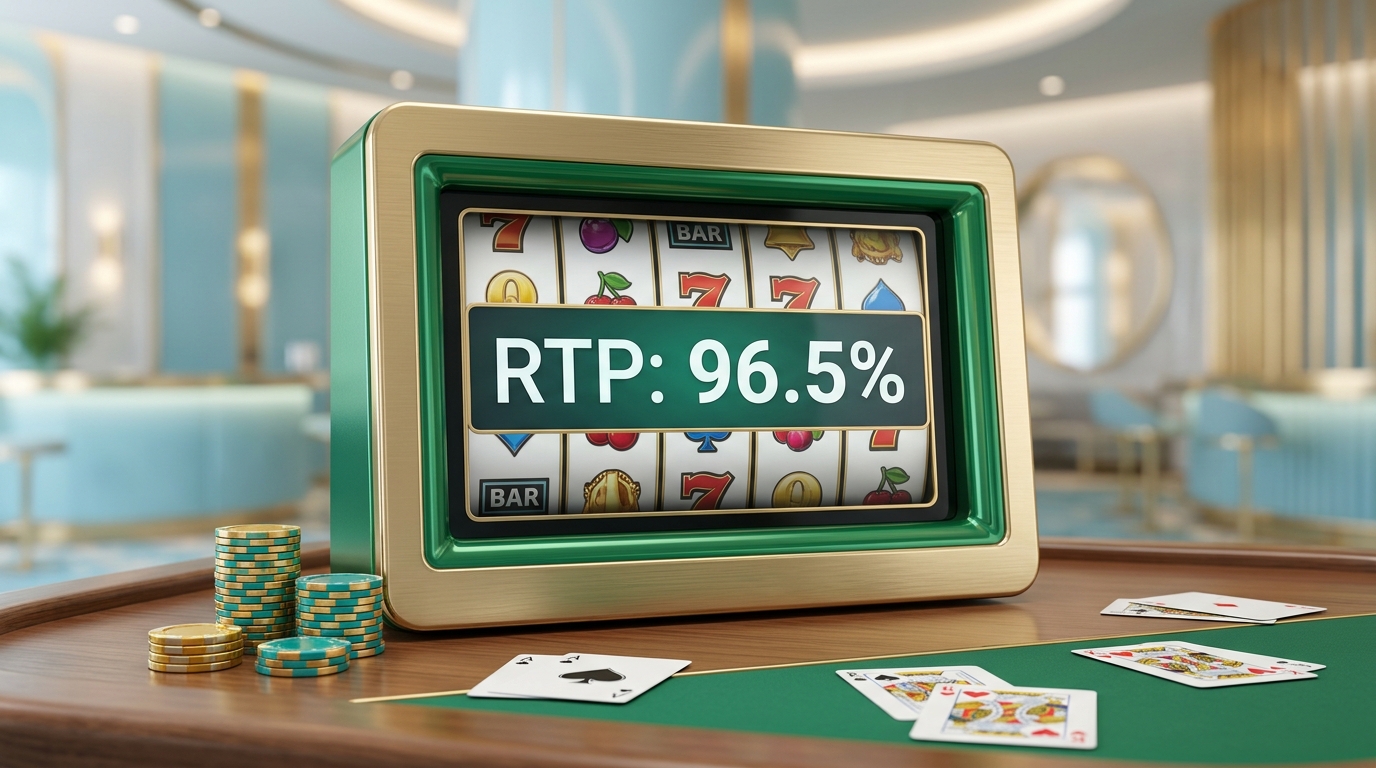
If you’ve spent any time on a casino site, you’ve probably seen three little letters next to a game: RTP. So, what does RTP mean? It stands for Return to Player, and it tells you how much of the money wagered on a game is paid back to players over time.
That’s the short answer. The longer one is more interesting, because RTP is one of the most useful numbers you can check before you play, and also one of the most misunderstood.
RTP in plain English
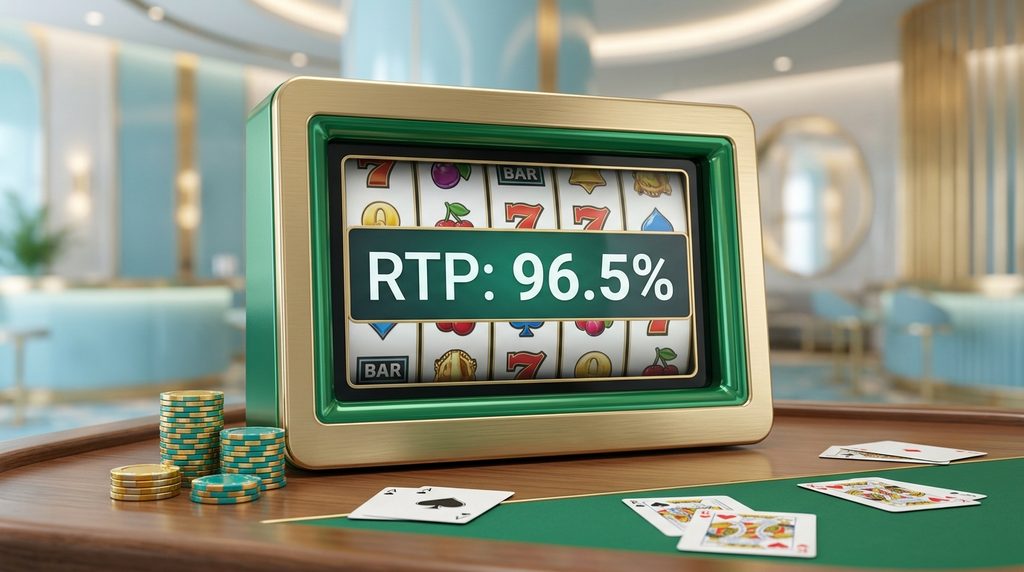
Imagine a slot has an RTP of 96%. That means that, over a huge number of spins, the game is designed to pay back $96 for every $100 wagered. The other $4 is what the casino keeps. That 4% is called the house edge.
So the two numbers are just opposite sides of the same coin:
House edge = 100% − RTP
A 96% RTP means a 4% house edge. A 94% RTP means a 6% house edge. Higher RTP is better for you.
The part most people get wrong
Here’s the catch: RTP is calculated over millions of spins, not your Friday night session.
If you play a 96% RTP slot with a $50 budget, you won’t get back exactly $48. You might lose it all in ten minutes. You might hit a bonus round and walk away with $400. RTP describes the long-run average of all players combined, not what will happen to you on any given day.
Think of it like a coin flip. Over a million flips, you’ll land very close to 50% heads. Over ten flips, you could easily get seven tails in a row. RTP works the same way: reliable in the long run, unpredictable in the short run.
What is a good RTP?
It depends on the game, but here are some typical ranges:
- Online slots: usually around 94% to 97%. Anything at 96% or above is generally considered solid.
- Blackjack: about 99% or higher if you play basic strategy, depending on the table rules.
- European roulette: 97.3%.
- American roulette: 94.74%, thanks to the extra double-zero pocket.
- Baccarat (banker bet): around 98.9%.
Notice that table games often have higher RTPs than slots. That doesn’t mean they’re “easier to win,” only that the casino’s built-in edge is smaller.
RTP vs. volatility: two different things
Many players assume a high RTP means frequent wins. Not quite. That’s where volatility (also called variance) comes in.
- Low volatility: smaller wins, but they come more often. Your balance moves slowly.
- High volatility: long dry spells, but occasional big payouts. Your balance swings a lot.
Two slots can both have a 96% RTP and feel completely different to play. One might trickle out small wins all evening, while the other might give you nothing for 50 spins and then pay out in a single bonus round. If you’re playing with a smaller budget, a lower-volatility game will usually last longer.
Where to find a game’s RTP
Most reputable casinos and game providers publish this information. Here’s where to look:
- The game’s info or help screen. Open the “i” or menu icon inside the game. The RTP is often listed in the rules.
- The casino’s game library. Some sites show RTP right on the game tile.
- The provider’s website. Studios usually publish RTPs for their titles.
- Independent review sites. Useful for comparing games side by side.
One more thing to know: some slots come in multiple RTP versions. A provider may offer the same game at 96%, 94%, and 92%, and the casino chooses which version to run. So the RTP you saw on a review site may not match the version at the casino you’re actually playing on. Always check inside the game itself.
Is RTP really fair? Who checks it?
RTP isn’t just a marketing claim. At licensed casinos, games use certified random number generators (RNGs), and independent testing labs such as eCOGRA or iTech Labs audit them. In Ontario, operators also have to meet the standards set by iGaming Ontario and the AGCO. In other provinces, rules vary, so it’s worth checking that a site is properly licensed before you deposit.
If a casino doesn’t tell you the RTP of its games or doesn’t show any licensing information, treat that as a red flag.
How to use RTP to your advantage
RTP can’t make you win, but it can help you play smarter:
- Pick higher-RTP games when you have the choice. Over time, you lose less per dollar wagered.
- Match volatility to your budget. A small bankroll and a high-volatility slot is a rough combination.
- Check bonus terms. Some games contribute less (or nothing) toward wagering requirements, and slots with high RTP are sometimes excluded from bonuses altogether.
- Don’t chase “due” wins. A slot that hasn’t paid out in a while is not “due.” Every spin is independent.
Quick FAQ
Does a higher RTP mean I’ll win more often?
Not necessarily. RTP measures total payback over time, while volatility decides how and when the wins arrive.
Is 96% RTP good?
Yes, it’s around or slightly above the average for online slots.
Can the casino change a game’s RTP?
Not on the fly. But some providers offer several RTP versions of the same game, and the casino picks which one to offer.
Is RTP the same as the chance of winning?
No. RTP is about the overall percentage returned, not the odds of winning on a single spin or hand.
The bottom line
So, what does RTP mean? It’s the percentage of wagered money a game pays back to players over the long run, and the flip side of the casino’s house edge. It’s a helpful number for comparing games, but it’s not a promise about your next session.
Play for entertainment, set a budget you’re comfortable losing, and never chase losses.