



Let’s be honest: clicking onto an online casino for the very first time can feel like walking into a neon-lit maze.
Banners are flashing, slot games with wild names are everywhere, and the site keeps throwing around weird abbreviations like “RTP” or “20x Wagering” as if you’re supposed to have a degree in online gambling.
At first glance, it looks pretty simple: you log in, deposit twenty bucks, hit a shiny button, and cross your fingers. But have you ever wondered what’s actually happening behind that screen? How do you know the games aren’t rigged? And where does your money actually go when you press “Deposit”?
If you’re brand new to all this, don’t worry. Let’s peel back the curtain and look at how online casinos actually work—in plain, plain English.
1. The Invisible “Brain” Behind the Site
First off, most online casinos don’t build their website software from scratch in some basement. That would be an absolute nightmare to maintain.
Instead, they run on massive engine platforms (in the business, they call these PAMs, or Player Account Management systems).
Think of this as the digital casino’s brain and vault combined. It’s the invisible machinery that:
Keeps your personal details safe.
Makes sure your actual money and your “bonus money” don’t get mixed up.
Checks your ID when you sign up so underage kids or scammers can’t open accounts.
Whenever you log in or check your balance, you’re interacting with this core engine, not the games themselves.
2. Plot Twist: Casinos Don’t Make Their Own Games
Here’s something that trips up almost every beginner: the casino you’re playing on didn’t actually create the games on its site.
When you spin a slot wheel or sit at a virtual blackjack table, you’re playing a game built and hosted by an entirely separate company—a software provider like Pragmatic Play, NetEnt, or Evolution. The casino is basically just renting the game and streaming it to your screen.
And honestly? That’s fantastic news for you as a player. Here is why:
No Rigging: Since the game lives on the provider’s servers, the casino manager can’t secretly tweak the code to make you lose on a Friday night.
Pure Math: The outcomes are run by a Random Number Generator (RNG). It’s a computer program churning out millions of random numbers every second. When you hit “Spin,” it picks a number, and that determines your result. Simple, cold math.
3. What on Earth is “RTP”?
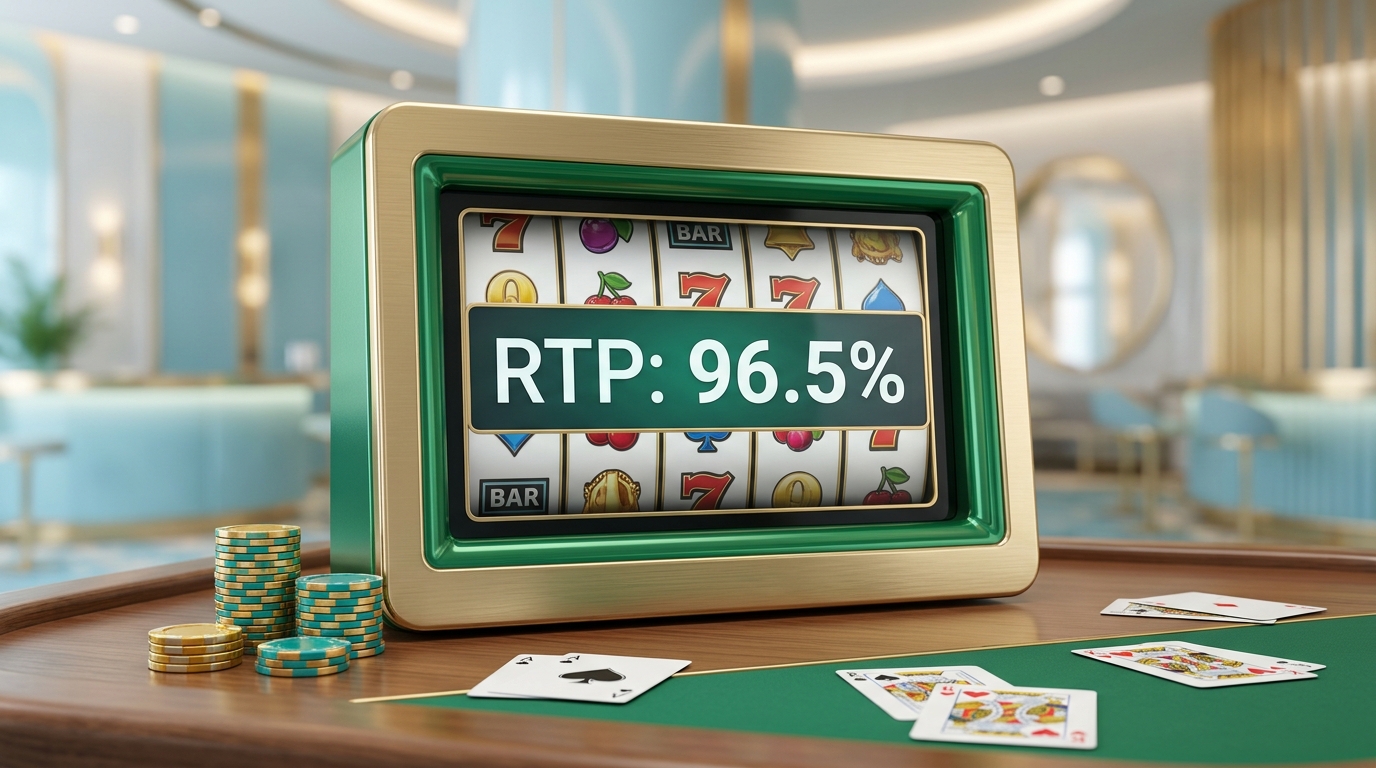
You’ll see this three-letter acronym everywhere, so let’s clear it up. RTP stands for Return to Player.
In simple terms, it’s the percentage of money a game is programmed to pay back to players over time.
Say a slot has an RTP of 96%. Mathematically, over millions of spins, that game will keep $4 out of every $100 wagered and pay back $96 to the crowd.
Does that mean if you spend $100 tonight, you’re guaranteed to walk away with $96?
Nope. That’s where the chaos and luck come in. You might lose that $100 in ten minutes, or you might hit a $1,000 jackpot on your second spin. That short-term unpredictability is what gamblers call volatility—and it’s the whole reason people play.
4. Moving Money In (and Getting It Back Out)
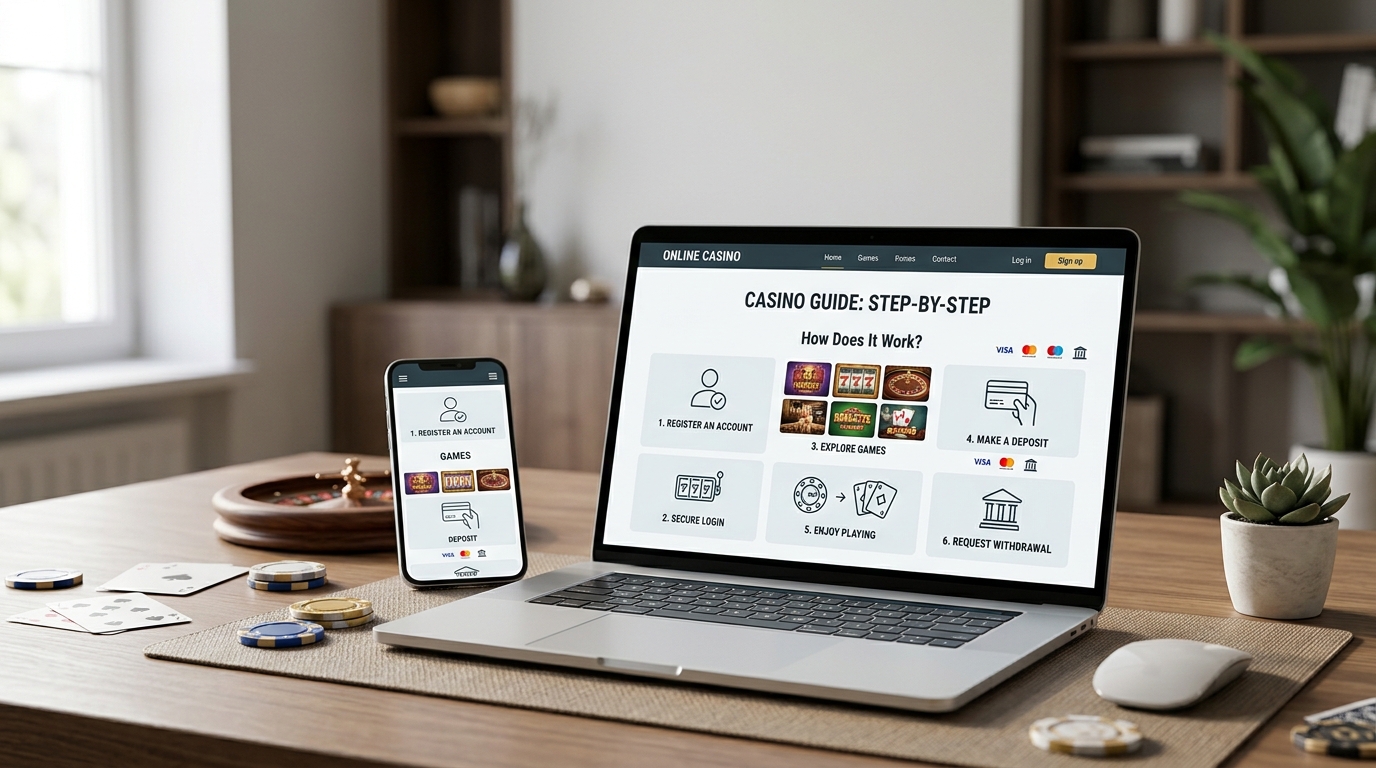
Getting money into a casino is usually smooth sailing. They accept pretty much everything these days:
Credit and debit cards (Visa, Mastercard)
E-wallets (like PayPal, Skrill, or Neteller)
Bank transfers and local payment apps
Crypto (Bitcoin, USDT, etc.)
Deposits happen instantly. But withdrawing your winnings? That’s where beginners usually get hit with a surprise speed bump.
Before a casino pays out your cash, they’ll almost certainly ask you to verify who you are (usually by sending a photo of your ID or a utility bill). It feels like a hassle, but it’s a strict legal requirement to stop identity theft and money laundering. Once that’s cleared, your money gets sent back to your account.
5. The Catch Behind “Free” Bonuses
“Deposit $20, Get $20 Free!” Sounds like free money, right?
Well… yes and no. Casinos love giving out welcome bonuses, but they aren’t in the business of handing out free cash with zero strings attached.
Every bonus comes with something called wagering requirements (or playthrough rules).
For example, if you get a $20 bonus with a 20x wagering requirement, you have to place $400 worth of total bets ($20 x 20) in the casino before you’re allowed to withdraw any profits made from that bonus. Always skim the bonus fine print for thirty seconds before hitting “Claim”—it’ll save you a lot of headaches later.
6. How to Spot a Legit Casino (And Avoid the Scams)
Because real money is involved, you should never throw cash at a random site without checking its credentials first.
Scroll all the way down to the bottom of the casino’s homepage—the footer. That’s where legitimate casinos display their legal licensing info.
Look out for badges or registration details from known regulators:
Strict local oversight: Regulatory bodies such as the MGA (Malta), UKGC (UK), and relevant provincial gambling regulators in Canada, including the AGCO (Ontario), oversee licensed gambling operators within their respective jurisdictions.
International jurisdictions: Licensing hubs like Curaçao or Anjouan.
A license means the casino has to answer to an authority, keep player funds protected, and provide tools to help you manage your spending (like deposit limits or cooling-off periods).
The Bottom Line
At the end of the day, an online casino is just a clever combination of leased games, secure payment channels, and strict regulations.
Once you understand that the casino doesn’t control the outcome of the slots, and you know how bonuses actually work, the whole thing loses its mystery. Treat it as paid entertainment—like buying a movie ticket—keep your stakes reasonable, and you’ll have a much better time.